

Understanding the Key to True Mobility
Ever deal with a persistent ache in your shoulders? Or stiffness in your low back that stretching just can’t seem to fix?
We often blame our muscles, but the real issue is often deeper. Chiropractic care helps restore proper joint motion and nervous system function, but lasting change also depends on the connective tissue surrounding it all: fascia.
True healing requires understanding the body as a connected system. That means considering the connective tissue that influences how everything moves together in addition to skeletal alignment. Here is what you need to know about fascia and chiropractic care, and why this relationship is the secret to lasting movement.
What is Fascia and Why Does it Hurt?
Even without muscles or bones, your fascia alone provides a complete, three-dimensional blueprint of your physical form. According to Cleveland Clinic, this is because fascia is a continuous, three-dimensional connective tissue that stabilizes, separates, and integrates every vessel, bone, nerve, and organ.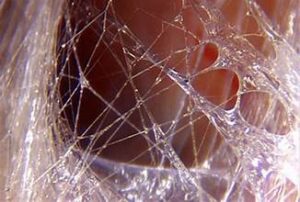

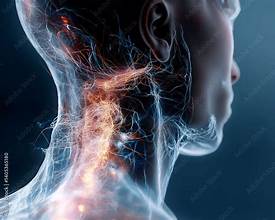
Think of it not just as a passive “wrapping”, but as a dynamic, responsive framework. It is also highly neurologically active, containing a large number of sensory receptors that influence how your body perceives tension and movement. When people ask, “Why does my fascia hurt?” the answer usually lies in its role as a communication network—when it gets tight, it sends constant pain signals to the brain.
This is critical because if your fascia becomes restricted or stuck, it creates constant, underlying tension. If fascial restrictions are not addressed, they can continue to pull on a joint even after it has been adjusted, limiting how long that change holds.
When fascia is healthy, it is fluid. The layers move across each other without friction. This tissue dynamically adjusts its thickness and strength to meet your body’s needs. When we sit in one position for hours or use repetitive motions, the body interprets this as a need for stability.
The fascia thickens and densifies in those areas, effectively splinting the joint. Doctors identify these sticky areas as fascial adhesions.

How to Hydrate for Better Mobility
How do you keep this fascia healthy? The most crucial thing is movement. Fascia is movement.
When healthy, fascia is predominantly water and collagen. One way to visualize this is by comparing it to a hydrated sponge. A hydrated sponge is naturally resilient, as it yields to pressure and recovers its shape instantly. But if that sponge dries out from inactivity or dehydration, it becomes stiff and brittle.
Clinical recommendations for fascial health focus on two pillars:
-
Hydraulic Lubrication: Water is the lubrication your fascia uses to glide. Without it, adhesions form more quickly.
-
Diverse Movement: Incorporating slow, shearing movements throughout your day—rather than just one intense workout—keeps the tissue resilient and prevents the drying out of the fascial web.
How Does a Chiropractor Help With Tight Fascia?
This is where many people feel stuck. While stretching can support muscle health, it does not always address deeper fascial restrictions. Stretches such as a upper body fascial massage or plantar fascia massage can be very helpful. Stretching won’t always clear out deep fascial adhesions. For a lasting release, one often needs to combine myofascial techniques with chiropractic adjustments. These techniques apply pressure to the tissue while it’s in motion, combined with the precise adjustments made by a chiropractor.
A chiropractic adjustment restores proper joint motion and improves communication within the nervous system. It tells the nervous system that a full range of motion is possible. Combining an adjustment with targeted soft-tissue work creates lasting change by:
-
Restoring proper joint mechanics.
-
Reducing fascial restrictions that limit movement.
-
Decreasing the nervous system’s drive to maintain protective tension.
This integrated approach is the difference between temporary relief and sustainable, pain-free mobility. By addressing both joint function and the fascial system, you create more lasting, efficient movement and more sustainable relief.